
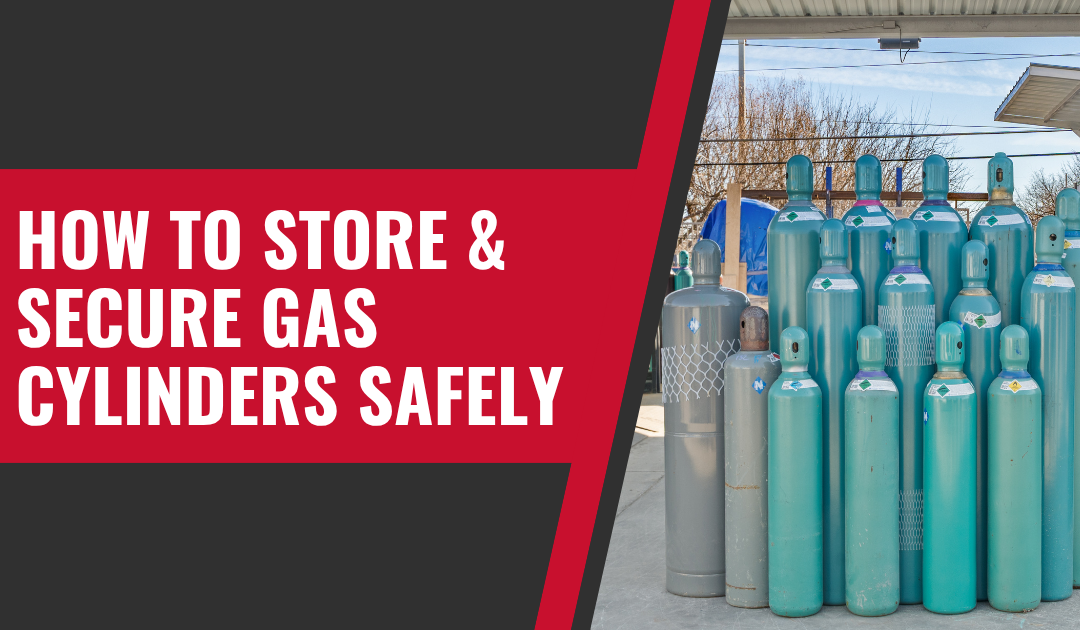
How to Store & Secure Gas Cylinders Safely
If you have spent any time around a welding shop, you have probably heard the old timers talk about gas cylinders like they are sleeping giants. There is a good reason for that. A standard high-pressure bottle can have upwards of 2,000 to 3,000 pounds of pressure per square inch. If that valve gets knocked off, you are no longer looking at a tool: you are looking at a torpedo that can go through a brick wall.
Out here in Fort Worth, we deal with extreme heat, busy job sites, and heavy equipment moving around. Keeping your gas cylinders safe is not just about following a rulebook. It is about protecting your shop, your crew, and your livelihood. At Tarrant Welding and Industrial Supplies, we see a lot of rigs come through, and we always want to make sure our customers are headed out with their gear locked down tight.
Always Upright, Always Capped
The first rule of thumb is the simplest: keep them standing up. You should never, under any circumstances, store a high-pressure cylinder on its side. For fuel gases like acetylene, storing them flat is a major fire hazard because the acetone inside can leak out and mess with the valve or the regulator.
When a bottle is not in use, the protective cap should be screwed on tight. We see it all the time: someone finishes a job and leaves the regulator on while the bottle sits in the corner. If something falls and hits that regulator, it creates a massive point of failure. The cap is there to take the hit so the valve doesn’t have to. If you aren’t currently pulling gas from it, the cap stays on. It is a simple habit that saves lives.
Securing the Load: Chains and Brackets
A cylinder is naturally top-heavy and easy to tip over. You need to make sure they are secured to a wall, a heavy-duty rack, or a dedicated welding cart. A single chain is better than nothing, but we recommend a “high and low” double chain setup. This prevents the bottle from kicking out at the bottom.
If you are building your own storage rack in your shop, make sure it is made of non-combustible material. Use heavy-duty steel chains or sturdy straps. Do not use bungee cords or thin rope. In the event of a fire or a shop accident, you want that bottle to stay exactly where you put it.
The 20-Foot Rule: Separation Matters
One of the biggest mistakes we see in shop layouts is keeping oxygen and fuel gases (like acetylene or propane) right next to each other in storage. If a fire breaks out, that oxygen is going to act like an accelerant, making a bad situation much worse.
The standard safety practice is to keep your oxygen cylinders at least 20 feet away from any fuel gas cylinders or highly combustible materials. If you do not have 20 feet of space in your Fort Worth shop, you can use a fire-resistant wall that is at least five feet high and has a fire-resistance rating of at least half an hour. Keeping your “burners” away from your “boosters” is a basic move that keeps a small accident from becoming a total loss.
Dealing with the North Texas Heat
We all know how brutal the Texas sun can be. When a gas cylinder sits in 100-degree weather under direct sunlight, the gas inside expands. This increases the internal pressure. While modern cylinders have safety relief valves designed to handle this, you don’t want to test them.
Try to store your bottles in a cool, dry, and well-ventilated area. If you have a mobile rig, try to park in the shade when you can. Never store cylinders near a heat source like a furnace, a forge, or even a heavy-duty welding machine that puts off a lot of heat. If the bottle gets too hot to touch, you are heading into the danger zone.
Transportation Tips for the Metroplex
Getting your gas from our shop on Bryan Avenue to your job site in Arlington or Keller requires some common sense. Never transport a cylinder in the trunk of a car or inside a closed van where gas could build up if there is a tiny leak.
Always transport cylinders in an upright position in the back of a truck, and make sure they are tied down so they cannot slide or tip. We have seen bottles rolling around in the back of pickups on I-35, and it is a recipe for disaster. Use a sturdy rack or at least a set of heavy ratchet straps. And again: make sure those caps are on before you put the truck in gear.
The Tarrant Welding Approach
At Tarrant Welding and Industrial Supplies, we take safety seriously because we care about the DFW welding community. We aren’t just here to sell you a refill: we are here to make sure you know how to handle that fuel safely. Every piece of advice we give and every product we carry is focused on work that is handcrafted, local, and done right.
Whether you need a new set of safety caps, a more secure welding cart, or advice on how to set up your shop’s gas manifold, we are here to help. We carry Tillman gloves, Miller helmets, and the best regulators in the business to ensure that every part of your setup is professional grade.
Financing Your Shop Upgrades
If you realize your current storage setup is a disaster waiting to happen, don’t wait to fix it. We know that high-quality racks, cages, and safety gear can add up. That is why we offer flexible financing options. You can upgrade your shop’s safety and storage equipment today and pay for it over time.
Investing in safety is the best way to ensure your business stays open for years to come. Stop by our shop or give us a call, and let’s talk about how to get your gas storage dialed in.
Need to swap out a bottle or upgrade your safety gear? Call us at 817-927-3331 or visit us in person. We will make sure you have the right gear and the right knowledge to stay safe on the job.